Florida summers are no joke, and neither is what they do to your lawn. Between blazing daytime temperatures, frequent afternoon storms, high humidity, and the risk of drought stress between rain events, keeping a healthy lawn through June, July, and August requires a different approach than the rest of the year.
The good news: with the right adjustments to your irrigation schedule, mowing habits, and soil care, your lawn can stay thick, green, and healthy all summer long. The University of Florida IFAS Extension is one of the best free resources for Florida-specific turf care, and their recommendations inform much of what follows.
1. Adjust Your Irrigation Schedule for Summer Conditions
This is the single most impactful thing you can do for your lawn in summer. Many homeowners set their irrigation systems in spring and leave them unchanged, but your lawn's water needs shift significantly as temperatures climb.
Key adjustments to make in June:
- Water deeply but less frequently. Florida lawns perform better with longer, less frequent watering sessions than with short, daily cycles. Deep watering encourages deeper root growth, which makes the lawn more drought-resilient.
- Water in the early morning. Watering between 4 and 8 AM gives the grass time to absorb moisture before the heat of the day, reduces evaporation loss, and minimizes the conditions that cause fungal disease.
- Avoid watering after 10 AM. Mid-day watering loses most of its effectiveness to evaporation. Evening watering leaves grass wet overnight, which promotes fungal issues, a real concern in Florida's humid summers.
- Reduce run time in zones with afternoon shade. Not all areas of your lawn have the same needs. Shaded areas need significantly less water than those in full sun.
If your irrigation system isn't running on a smart controller or has no rain sensor, summer is the right time to upgrade. A rain sensor alone can prevent tens of thousands of gallons of unnecessary watering over the course of a Florida summer. This also has direct drainage implications: overwatered yards drain poorly, which becomes a serious issue during hurricane season storm events.
2. Mow at the Right Height for the Season
Mowing habits that work fine in March become a liability in July. The biggest mistake Florida homeowners make in summer is cutting their grass too short.
Summer mowing guidelines:
- St. Augustine grass (the most common Florida lawn grass) should be kept at 3.5 to 4 inches in summer. Taller blades shade the soil, reduce moisture loss, and help prevent weed germination.
- Zoysia grass can be maintained at 2 to 2.5 inches, but avoid scalping.
- Bahia grass performs well at 3 to 4 inches and is naturally drought-tolerant.
- Never remove more than one-third of the blade in a single mowing. Cutting too aggressively shocks the grass and leaves it vulnerable to heat and disease.
- Keep mower blades sharp. Dull blades tear grass rather than cut it cleanly, creating entry points for disease and leaving the lawn with a brown, frayed appearance.
3. Watch for Signs of Drought Stress and Know the Difference from Overwatering
Both underwatering and overwatering produce similar symptoms: yellowing, wilting, and thin grass. Knowing which problem you have is essential before making adjustments.
Signs of drought stress:
- Grass blades fold or curl lengthwise
- Footprints remain visible in the lawn after walking across it
- Gray-blue tint to the grass color
- Dry, crumbly soil an inch below the surface
Signs of overwatering or poor drainage:
- Consistently soft, spongy feel underfoot
- Mushrooms or algae in the lawn
- Yellowing that persists despite regular watering
- Thatch buildup and surface water pooling
If you're unsure, do the screwdriver test: try pushing a 6-inch screwdriver into the soil. If it slides in easily, moisture is adequate. If it resists, the soil is too dry.
4. Address Drainage Issues Before They Worsen
Florida's summer brings intense rain events, often 2 to 4 inches in a single afternoon storm. If your yard has low spots, compacted soil, or inadequate drainage, those areas will develop standing water, which drowns grass roots and creates conditions for fungal disease and pests.
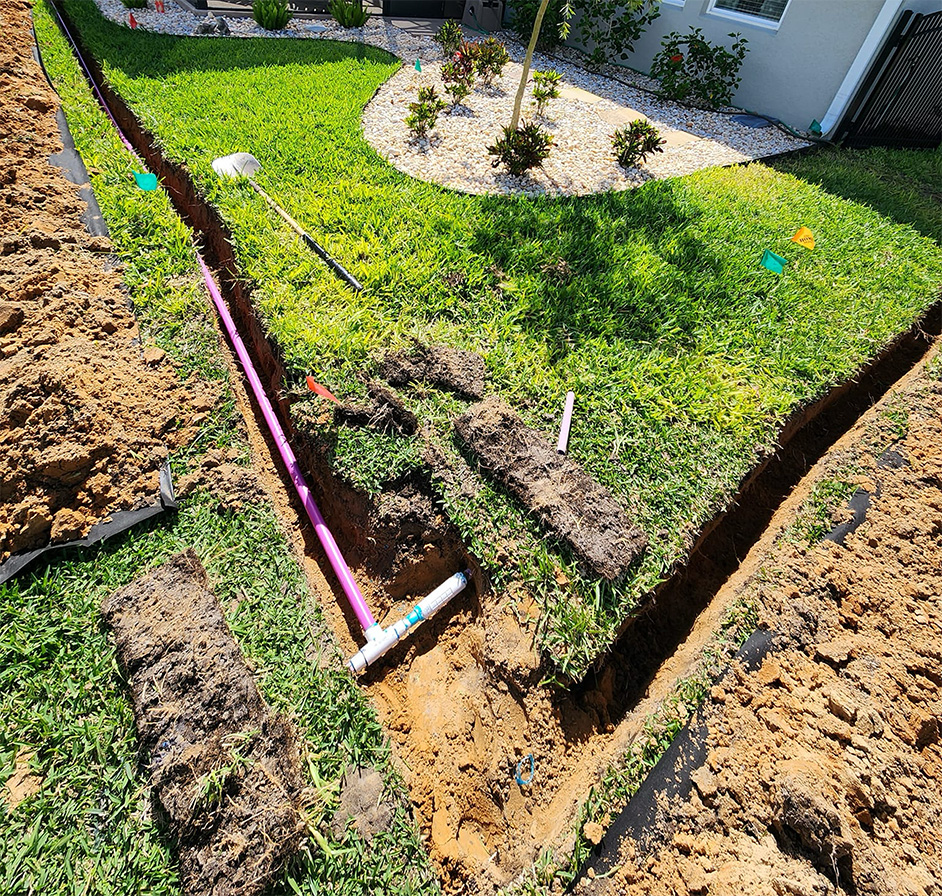
If you notice persistent wet areas after rain, it's worth having a professional assess your drainage. Our solutions range from simple regrading to French drain installation. Addressing the problem in early summer prevents a full season of lawn damage and reduces the flooding risk that intensifies during active hurricane season weather patterns.
5. Fertilize Correctly, or Not at All
Fertilizing in summer is something many Florida homeowners do wrong. Applying too much nitrogen in extreme heat pushes rapid, weak top growth that the roots can't support, and it increases the lawn's water demand significantly.
Summer fertilization guidelines:
- If your lawn looks healthy and green, it likely doesn't need additional fertilizer in June.
- If you do fertilize, use a slow-release, low-nitrogen formula appropriate for your grass type.
- Avoid fertilizing before a storm. Rain washes fertilizer off the lawn before it can be absorbed, creating runoff and wasting product.
- Always follow Florida-friendly fertilization guidelines for your county. Many counties restrict certain fertilizer applications during the rainy season to reduce water quality impacts.
6. Stay on Top of Weed and Pest Pressure
Warm, wet conditions make summer prime time for both weeds and lawn pests. Chinch bugs, sod webworms, and armyworms are all active during Florida summers and can damage large sections of lawn quickly.
- Inspect your lawn weekly for irregular brown patches that expand over time. This is often an early pest sign.
- Apply pre-emergent herbicide in late spring or early June to reduce summer weed germination.
- Treat identified pest infestations promptly. A few days of inaction can mean significant sod damage.
When to Call in a Professional
Some lawn problems are straightforward to DIY. Others, including persistent brown patches, widespread pest damage, compaction issues, or a lawn that simply isn't recovering despite proper care, benefit from a professional assessment.
If your outdoor space could use more than just lawn work, consider pairing lawn restoration with a patio or walkway upgrade. A well-hardscaped yard reduces lawn stress by limiting foot traffic on grass and improving surface drainage.
Renovation Outdoors provides lawn care, irrigation system tuning, sod installation, and drainage solutions across Central Florida. If your lawn is struggling this summer or you want to get ahead of problems before the heat peaks, contact us for a property evaluation.


.png)